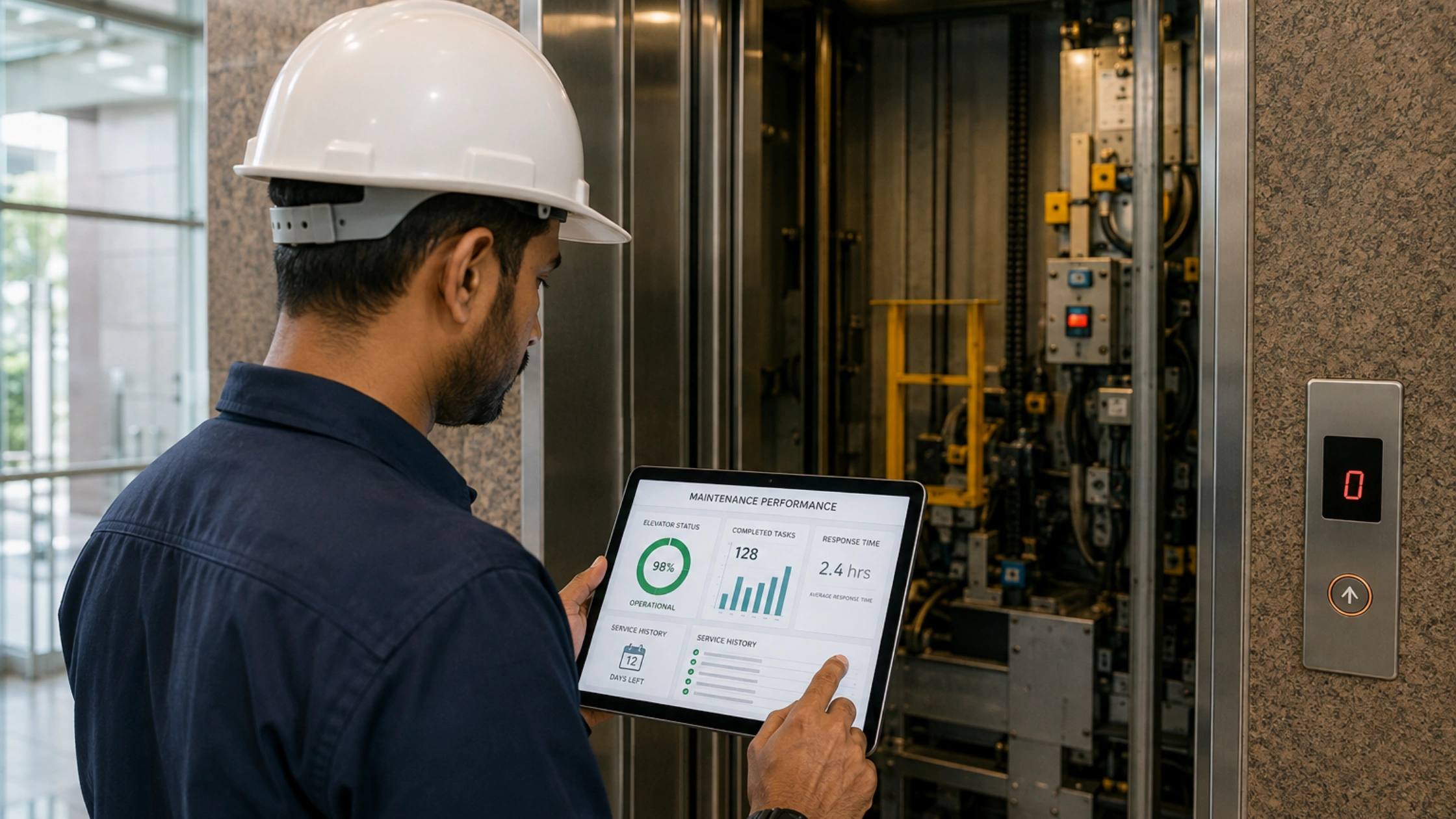
Ask most apartment association secretaries how their lift contractor is performing and the answer is a feeling rather than a figure. It broke twice last month. The technician comes when he feels like it. Someone was stuck in July. Those impressions are real, but they are not evidence. Elevator maintenance Bangalore buildings pay for is one of the few recurring costs where measurement is easy and almost nobody bothers. BG Elevators helps building owners understand maintenance performance, while BG Elevators recommends tracking clear service and performance indicators instead of relying only on impressions.
Why Tracking Beats Negotiating on Price
Contract rates for the same building vary widely between vendors, which tempts committees to shop on cost alone. That usually backfires. The cheaper contract quietly reduces visit frequency, excludes the parts most likely to fail, and stretches response times.
What you actually buy with elevator maintenance Bangalore contracts is availability. A lift that runs 99 per cent of the time in a G+8 residential block is a different product from one that runs 94 per cent, even though both invoices look similar. Once you track availability and callouts, renewals stop being emotional and start being evidence-based.
Elevator Maintenance Bangalore: The Numbers Worth Tracking
Five metrics cover most of it, and all can be captured on one sheet at the security desk.
Callouts per lift per year
A well maintained passenger lift in a residential building typically generates a handful of unscheduled callouts a year. Once you are seeing one a month, something systemic is wrong: a door operator on its way out, a worn landing door roller set, or preventive maintenance that is being signed for without being done.
Response and repair time
Track two clocks. Time to attend, from the call being logged to a technician arriving, and time to restore, from arrival to the lift running. Most contracts promise attendance within four hours in the city and shorter for entrapments. Log the actual times and the gap between promise and practice becomes obvious within a quarter.
Entrapments and downtime
Entrapments deserve their own line, with date, duration and cause. Any repeat pattern, particularly door-related, needs escalation rather than another reset. Downtime is simply hours out of service per month; anything above a day a month in a residential building signals either ageing equipment or thin servicing.
Repeat faults on the same component
If the same board, contactor or door operator appears three times in six months, you are being repaired rather than fixed.
Lift Maintenance Records: What the Logbook Should Contain
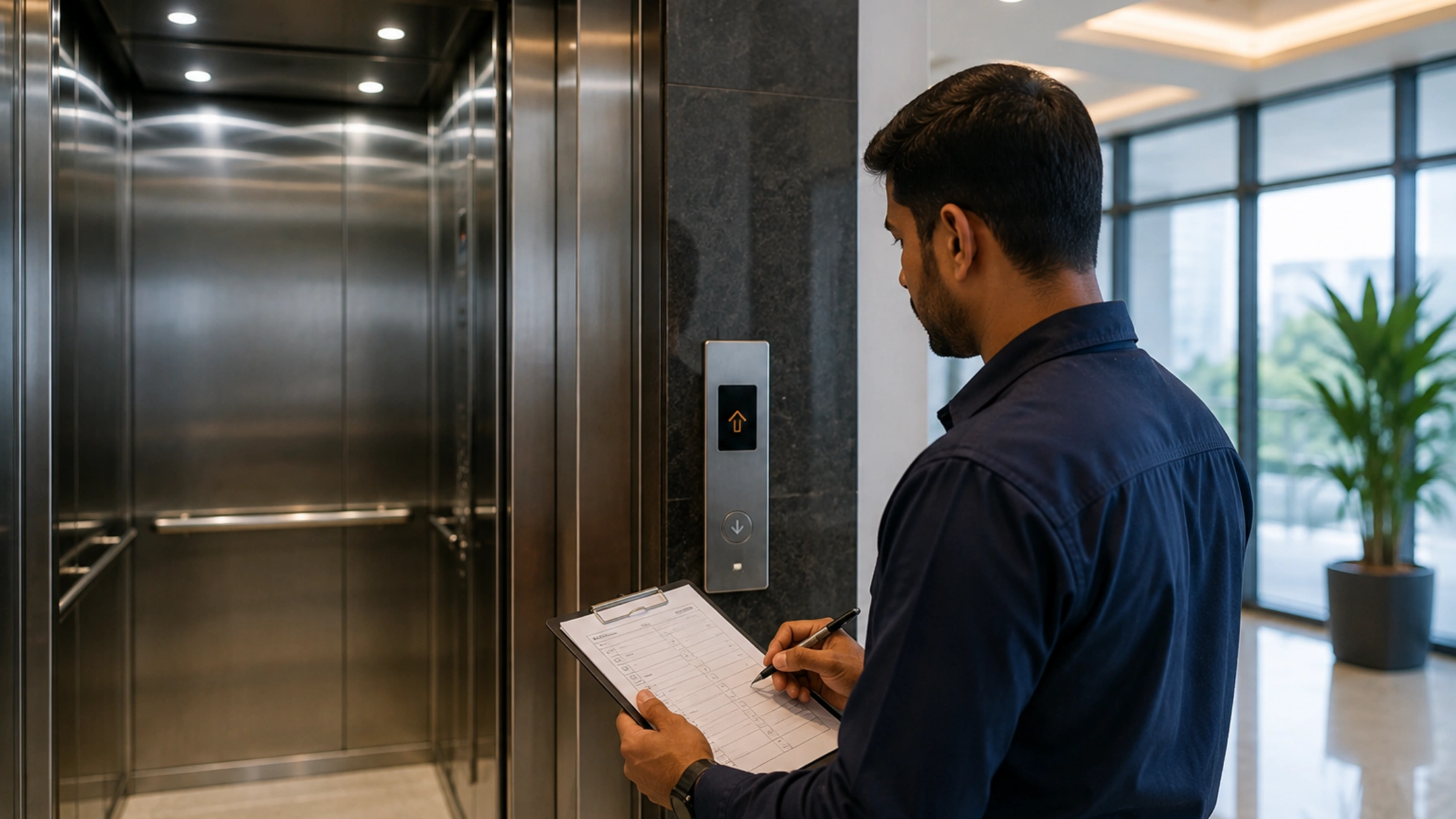
Every elevator maintenance Bangalore contract should require a bound logbook at the lift lobby, entered before the technician leaves. Good lift maintenance records include the date and arrival time, the technician’s name, work performed by component, parts replaced with part numbers, readings taken, and the signature of the building representative.
Two habits make the difference. First, photograph the logbook page after every visit so the record survives a lost book. Second, insist that routine visits list what was checked, not just “servicing done”, because a generic entry is worthless in a dispute.
Digital records are fine, and several contractors offer app-based reporting. Ask for exportable data rather than screenshots. The point of lift maintenance records is looking back over twelve months and spotting the pattern.
Preventive Maintenance and the Lift Service Schedule
Preventive maintenance is the part you are really paying for, and the easiest to skip invisibly. Agree a written lift service schedule with your contractor and check the logbook against it.
|
Interval |
Typical scope |
|
Monthly |
Door operation, levelling, safety circuits, car and landing panels, alarm and intercom, machine noise |
|
Quarterly |
Guide shoes and rails, door rollers and locks, brake adjustment, rope condition, pit cleaning |
|
Half-yearly |
Overspeed governor check, safety gear test, buffer inspection, ARD battery test, controller connections |
|
Annual |
Full load test, insulation resistance, rope tension and elongation, wear measurements |
Most elevator maintenance Bangalore contracts run on a monthly residential visit. Higher-traffic commercial buildings often need fortnightly. If your lift carries construction material during a renovation, increase the frequency temporarily, because door gear takes a beating that no lift service schedule anticipates.
Elevator Inspection and Statutory Compliance
Lifts in Karnataka come under state legislation, so registration, an operating licence and periodic inspection by the electrical inspectorate all apply. Equipment follows the IS 14665 series.
Any elevator maintenance Bangalore file should sit alongside the logbook and contain:
- The current operating licence and its expiry date
- The last elevator inspectionreport and any observations raised
- Evidence that observations were closed, with dates
- Annual load test and safety gear test certificates
- Insurance details and the emergency contact list displayed in the lobby
An elevator inspection that turns up open observations from the previous cycle is an awkward conversation, and in a commercial building it can affect occupancy paperwork. Diarise licence renewal two months ahead.
Reading the AMC Contract Properly
Contracts fall into two families, and the difference matters more than the headline rate.
- Semi-comprehensive.Labour and routine servicing included, parts charged separately. Lower monthly cost, unpredictable annual cost. Suits newer lifts still under warranty for major components.
- Comprehensive.Parts and labour included, usually with named exclusions such as ropes, the traction machine or vandalism. Higher monthly cost, far more predictable.
For a residential building, indicative annual elevator maintenance Bangalore associations pay tends to fall between 25,000 and 60,000 rupees per lift for semi-comprehensive, and meaningfully more for comprehensive cover. Commercial lifts sit higher. Read the exclusion list before comparing quotes, because that list is where the real price hides.
Elevator Maintenance Bangalore: Building a Simple Tracking System
You do not need a maintenance platform. A shared spreadsheet with one row per event works, and takes a supervisor about two minutes per entry. Columns: date, lift number, event type, time logged, time attended, time restored, fault description, component, parts used, technician, and a notes field.
Review it quarterly, not annually. Bring the summary to your vendor review meeting and ask specific questions: why did lift two account for most callouts, why did attendance slip in the monsoon, what is the plan for the door operator that failed twice. Vendors respond very differently to a spreadsheet than to a complaint. Sustained elevator maintenance Bangalore committees can actually verify tends to cost the same and deliver more.
When the Data Says Modernise Instead
Tracking elevator maintenance Bangalore eventually answers a bigger question. If a lift is fifteen to twenty years old, spare parts are getting scarce, callouts are climbing, and annual repair spend is approaching a quarter of the cost of a new installation, repair is no longer the economical path.
Modernisation options range from a controller and drive upgrade, which often transforms ride quality and energy use, through door equipment replacement, to full replacement of everything but the shaft. Twelve months of clean records give you the evidence to choose, and to justify the spend to residents.
Frequently Asked Questions
1. How often should a residential lift be serviced?
Monthly is the norm for residential buildings in the city, with quarterly, half-yearly and annual tasks layered on top. High-traffic or commercial installations often justify fortnightly visits. Frequency should also rise temporarily during renovation periods when lifts carry construction material and door gear wears faster.
2. What should elevator maintenance Bangalore contracts always include?
At minimum: a defined visit frequency, a written scope per visit, response time commitments for breakdowns and entrapments separately, a named escalation contact, logbook entries signed on site, and a clear list of excluded parts. Statutory inspection support and licence renewal assistance are worth confirming in writing too.
3. Who is responsible if someone is trapped in a lift?
The building owner or association carries primary responsibility for safe operation, with the contractor bound by the response times in the contract. Ensure the intercom works, emergency numbers are displayed in the car and lobby, and at least one trained person on site knows the manual rescue procedure.
4. How long does a lift usually last?
Most passenger lifts give fifteen to twenty-five years of service before major modernisation, depending on traffic, servicing quality and environment. Controllers and door operators generally need attention first. Well-kept records extend that life considerably, because small faults get corrected before they damage other components.
Conclusion
Tracking elevator maintenance Bangalore buildings depend on is not a technical exercise. Log every call with times, keep a signed logbook with real detail, hold your contractor to a written lift service schedule, and file every elevator inspection report with its closure evidence. Review the sheet quarterly rather than waiting for renewal week. Within two or three quarters you will know whether you are buying availability or just visits, and you will have the evidence to renegotiate, escalate or plan a modernisation.
If you’re weighing up your options, BG Elevators can help you review your maintenance history and understand where service performance can be improved. Contact BG Elevators to discuss your elevator maintenance and service requirements with the team. You can also follow BG Elevators on Instagram for elevator solutions, maintenance insights, project updates and industry information. BG Elevators is ready to help you make informed decisions about ongoing elevator maintenance.